

The Most Resilient Organizations Are Built To Outlive Their Leaders
IT Trends Weekly Issue #42
Organizations celebrate great leaders.
The institutions that endure are built so leadership can change without losing momentum.
Resilience is not what an organization does well while its leader is watching.
It is what continues, intact, when no one is.
Organizations celebrate great leaders.
They tell stories about visionary founders, transformative mayors, charismatic executives, and department heads who seemed capable of carrying entire institutions on their shoulders.
Yet history rarely remembers organizations simply because they had extraordinary leaders.
It remembers the ones that endured.
A respected founder retires.
A mayor leaves office.
A CIO accepts another role.
A department head suddenly becomes unavailable.
The organization pauses.
Some recover quickly.
Others stall.
Why?
The difference is rarely talent.
The difference is institutional resilience.
Some organizations have built governance, authority, and operational systems that continue functioning regardless of who occupies the corner office. Others discover, often painfully, that critical knowledge, decision-making, and momentum lived primarily inside one individual.
Leadership matters.
But resilience begins where individual leadership ends.
Because resilience is not what an organization does well while its leader is watching.
It is what continues, intact, when no one is.
Leadership is temporary.
Institutions are meant to endure.
And the organizations most prepared for the future understand the difference.
Stay Ahead of the Conversation
IT Trends Weekly explores technology, governance, cybersecurity, resilience, and leadership through the lens of real organizations facing real challenges.
Join executives, public sector leaders, and business owners who receive thoughtful analysis designed to inform decisions—not sell hype.
New issues published weekly.
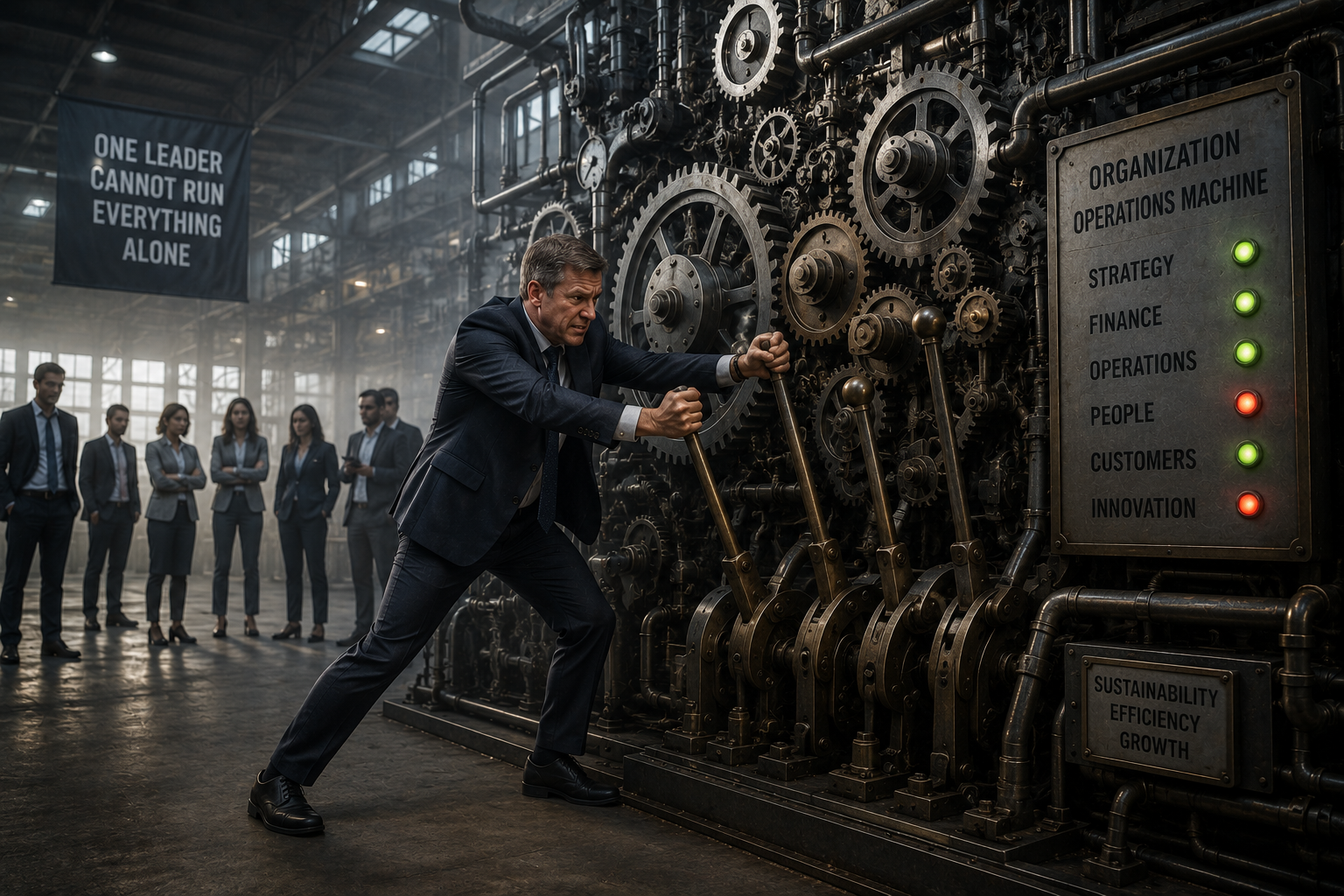
The Hero Leader Is A Single Point Of Failure
Modern organizations admire decisive leaders.
They reward the executive who knows everything, solves every crisis, approves every important decision, and personally keeps operations moving.
At first glance, this appears to be strength.
In reality, it often creates fragility.
Organizations rarely fail because leadership changes.
They fail because too much depended on one person.
Leadership researchers have long identified key person risk as one of the greatest threats to organizational continuity. When institutional knowledge, relationships, and decision authority are concentrated in a single role, organizations become fragile regardless of how talented that individual may be.
The risks extend beyond succession.
Hero leadership creates bottlenecks.
Employees hesitate to act.
Managers defer decisions upward.
Innovation slows because initiative becomes permission-based.
Eventually, leaders themselves become exhausted attempting to serve as strategist, problem solver, arbitrator, and institutional memory simultaneously.
The irony is difficult to ignore.
The leader celebrated for holding everything together may unknowingly prevent the organization from learning how to stand on its own.
Strong organizations develop leaders.
Resilient organizations develop systems.
Those systems create clarity.
They establish decision boundaries.
They encourage initiative while preserving accountability.
Most importantly, they ensure the organization’s performance does not fluctuate dramatically when leadership inevitably changes.
Leadership excellence remains important.
Leadership dependence is dangerous.
The distinction matters.
Governance Is The Skeleton That Outlives Leadership
Governance is often misunderstood.
Some view it as bureaucracy.
Others reduce it to policies, committees, or compliance exercises.
But effective governance serves a more fundamental purpose.
Governance is the skeleton that outlives leadership.
It defines who can decide.
It clarifies how decisions are made.
It establishes what must continue regardless of personnel changes.
And it preserves organizational identity even as leaders come and go.
This principle appears repeatedly across resilient institutions.
Central banks maintain continuity across changing administrations.
Public agencies continue serving citizens through elections and retirements.
Universities preserve mission and standards across generations of presidents and trustees.
The continuity does not come from individual brilliance.
It comes from shared strategic intent.
Delegated authority is not a concession.
It is a resilience strategy.
When decision rights are documented and understood, organizations move faster.
When institutional knowledge is captured rather than hoarded, transitions become smoother.
When authority is structured, organizations remain effective during uncertainty.
Leaders establish direction.
Teams understand priorities.
Authority is distributed intentionally.
Execution continues even when circumstances change.
The objective is not independence from leadership.
It is independence from any single leader.
Because organizations built around personalities inherit the limitations of those personalities.
Organizations built around governance inherit endurance.

Continuity Is A Pipeline, Not A Pedestal
Many organizations discuss succession.
Far fewer prepare for it.
They identify future leaders but fail to develop them.
They recognize critical knowledge but never document it.
They assume experience will naturally transfer from one generation to the next.
It rarely does.
Continuity is a pipeline, not a pedestal.
The organizations most prepared for leadership transitions treat leadership development as an institutional responsibility rather than an individual accomplishment.
Future leaders are given opportunities to make decisions before they hold senior titles.
Knowledge transfer is intentional.
Mentorship is expected.
Leadership capabilities are practiced repeatedly rather than discovered during emergencies.
This matters because leadership transitions are no longer rare events.
Executives retire.
Public officials complete terms.
Career mobility increases.
Burnout alters timelines.
Unexpected circumstances emerge.
Organizations that assume continuity will happen automatically often discover gaps only after leadership changes occur.
Projects lose momentum.
Decision-making slows.
Institutional history disappears.
Relationships weaken.
Employees become uncertain.
The problem is rarely a lack of talent.
The problem is an insufficient pipeline.
Resilient organizations invest in leadership readiness continuously.
They assume transitions are inevitable.
They prepare accordingly.
Leadership is temporary.
Institutions are meant to endure.
Organizations seeking to strengthen leadership continuity often discover that resilience starts with governance.
At Imperial Valley Info-Tech, our Cybersecurity & Governance services help organizations establish decision frameworks, document institutional knowledge, develop operational resilience, and create systems designed to endure beyond any one leader.
Resilience Is Practiced, Not Filed
Every organization believes it is resilient.
Until circumstances test the claim.
A continuity plan stored on a server is not resilience.
A policy manual is not resilience.
An emergency binder gathering dust is not resilience.
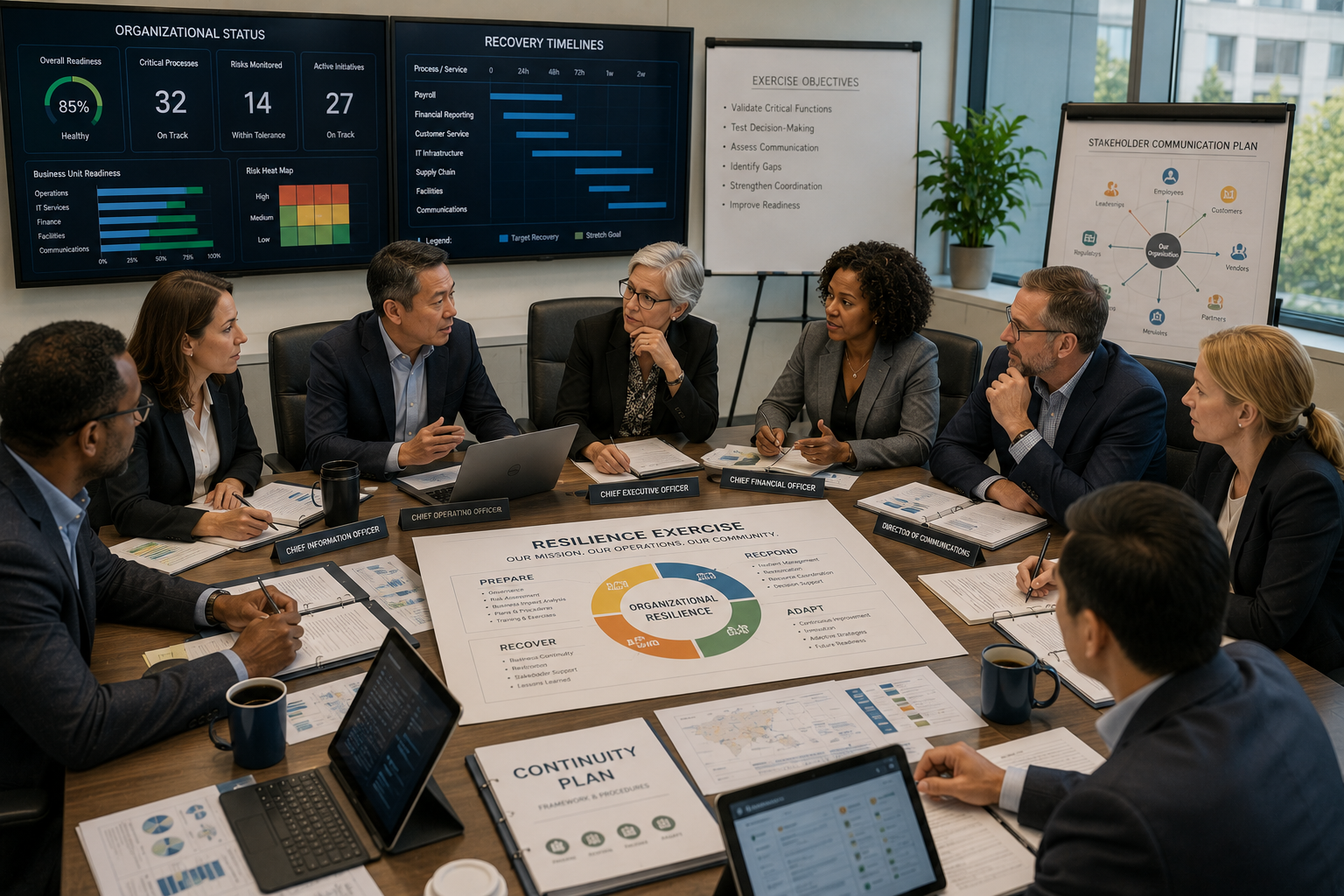
Resilience is practiced.
It is exercised.
It becomes part of organizational culture.
Operational resilience requires leadership resilience.
Organizations must repeatedly test:
• Who makes decisions when leaders are unavailable?
• What authority shifts automatically?
• How is institutional knowledge accessed?
• What processes continue without escalation?
Decision rights must survive disruption.
The organizations that answer these questions before they need to are consistently more adaptable.
Preparation matters.
Culture matters.
Practice matters.
Because resilience is not revealed during stability.
It is revealed during transition.
The Organizations That Endure Build Beyond Themselves
This conversation is not limited to multinational corporations.
In many ways, it matters even more to smaller institutions.
Municipal governments under 100,000 residents often depend heavily on a few experienced employees.
Small businesses rely on founders whose knowledge exists largely in memory.
School districts depend on long-serving administrators.
Public agencies frequently operate with lean teams where individual departures create outsized disruption.
Yet some organizations navigate these transitions remarkably well.
A city manager retires and services continue seamlessly.
A founder steps away and the business continues growing.
A CIO moves on and technology initiatives maintain momentum.
Boards evolve.
Executive teams change.
Communities continue receiving the services they depend upon.
The difference is not luck.
It is stewardship.
The most resilient organizations see themselves as temporary caretakers of something larger.
They build systems meant to outlast their own careers.
They invest in documentation even when it feels unnecessary.
They create governance that distributes authority.
They teach others what they know.
They reward collaboration over dependence.
And they ask difficult questions long before circumstances demand answers.
Could this organization function tomorrow without me?
Would our decisions remain consistent?
Would our values survive?
Would momentum continue?
These questions are not expressions of insecurity.
They are expressions of responsibility.
Because institutional resilience is not about removing leaders.
It is about ensuring leadership transitions strengthen organizations instead of destabilizing them.
Leadership is temporary.
Governance endures.
Authority must survive disruption.
Institutions are strongest when leadership changes without losing momentum.
The organizations that endure understand something simple yet profound:
Their purpose is not to preserve individual influence.
It is to preserve collective capability.
Resilience is not what an organization does well while its leader is watching.
It is what continues, intact, when no one is.
Resilience is not built when everything goes according to plan.
It is built when organizations decide that their future must be larger than any one person.
Sources
- Deloitte Global Resilience Report https://www2.deloitte.com/us/en/insights/topics/risk-management/global-resilience-report.html
- FAA Crew Resource Management Research https://www.faa.gov/training_testing/training/fits/research
- PwC Crisis & Resilience Survey https://www.pwc.com/us/en/services/governance-insights-center/library/board-crisis-readiness.html
- NIST Cybersecurity Framework 2.0 https://www.nist.gov/cyberframework
- FEMA Continuity Guidance https://www.fema.gov/emergency-managers/national-preparedness/continuity
- CISA Resilience Planning Resources https://www.cisa.gov/topics/resilience into civilian governance principles)