
Why AI Governance Is Becoming a Board-Level Risk in 2026

Why AI Governance Is Becoming a Board-Level Risk in 2026
AI governance risk has fully crossed the line from theoretical concern to operational reality. In 2026, AI systems are no longer confined to innovation labs or limited pilot programs. They are actively influencing hiring and termination decisions, cybersecurity responses, customer communications, fraud detection, financial forecasting, supply chain optimization, and a growing list of operational workflows across organizations of every size.
As organizations confront AI governance risk, many are discovering the same gaps previously seen with undocumented systems and IT governance failures.
What has changed most dramatically is not the sophistication of the technology, but the organizational posture toward it. AI initiatives are now routinely approved at the board and executive level, often positioned as strategic investments intended to improve efficiency, reduce cost, or maintain competitive advantage. In many organizations, AI adoption has become an expectation rather than an exception.
However, while approval authority has moved upward, operational ownership has not always followed. This has created a widening gap between strategic intent and day-to-day accountability. Unlike traditional software systems, AI does not simply execute predefined instructions. It produces recommendations and decisions that influence real-world outcomes. When those outcomes are wrong, biased, or difficult to explain, accountability does not rest with the model or the vendor. It rests with the organization that allowed the system to operate without clear governance.
As a result, AI governance is no longer a technical concern or a future compliance issue. In 2026, it has become a board-level risk with legal, operational, financial, and reputational consequences.
What AI Governance Risk Actually Means for Organizations
AI governance is frequently misunderstood as a narrow regulatory requirement or a responsibility that can be delegated entirely to IT or data science teams. In practice, governance is an operating discipline. It defines how automated decision systems are owned, documented, monitored, audited, and corrected when failures occur.
Effective AI governance answers a small but critical set of foundational questions that apply regardless of industry, organization size, or technical maturity:
- Who is the executive owner accountable for the system’s outcomes?
- What data sources feed the model, and how sensitive is that data?
- Which decisions does the AI influence, and which does it automate outright?
- How are AI-driven decisions logged, retained, and later explained?
- What human override exists when the system produces an incorrect or harmful outcome?
If these questions cannot be answered clearly and consistently, the organization is not governing AI. It is delegating decision-making authority without assigning responsibility. That distinction becomes critical when regulators, auditors, insurers, or courts ask how a particular outcome was reached.
Governance does not mean preventing AI use or slowing innovation. It means defining boundaries, ownership, and escalation paths so that automated systems operate within acceptable risk tolerance.
Why Boards Are Increasingly Exposed
Boards are increasingly exposed to AI-related risk because they are often the approving authority for adoption without being the owning authority for operation. This creates a structural accountability gap that becomes visible only after problems emerge.

Patterns observed throughout 2025 and early 2026 include boards approving AI tools as productivity enhancers without defining decision limits, assuming vendors are responsible for compliance and auditability, and treating AI systems as interchangeable software rather than as decision-making mechanisms.
These mistakes closely resemble earlier governance failures associated with shadow IT and uncontrolled SaaS adoption. The difference is impact. AI systems frequently aggregate sensitive data, operate across departmental boundaries, and influence regulated activities. Once embedded into workflows, they become difficult to unwind without disrupting operations.
Boards that would never approve a financial system without internal controls are now approving AI systems without equivalent oversight. As scrutiny increases, that inconsistency is becoming harder to justify.
The Regulatory and Legal Reality in 2026
Despite frequent headlines suggesting sweeping bans, regulators are not attempting to prohibit AI. Their focus is on accountability, transparency, and risk management. Guidance from standards bodies and regulatory agencies consistently emphasizes documentation, traceability, and human oversight for high-impact use cases.
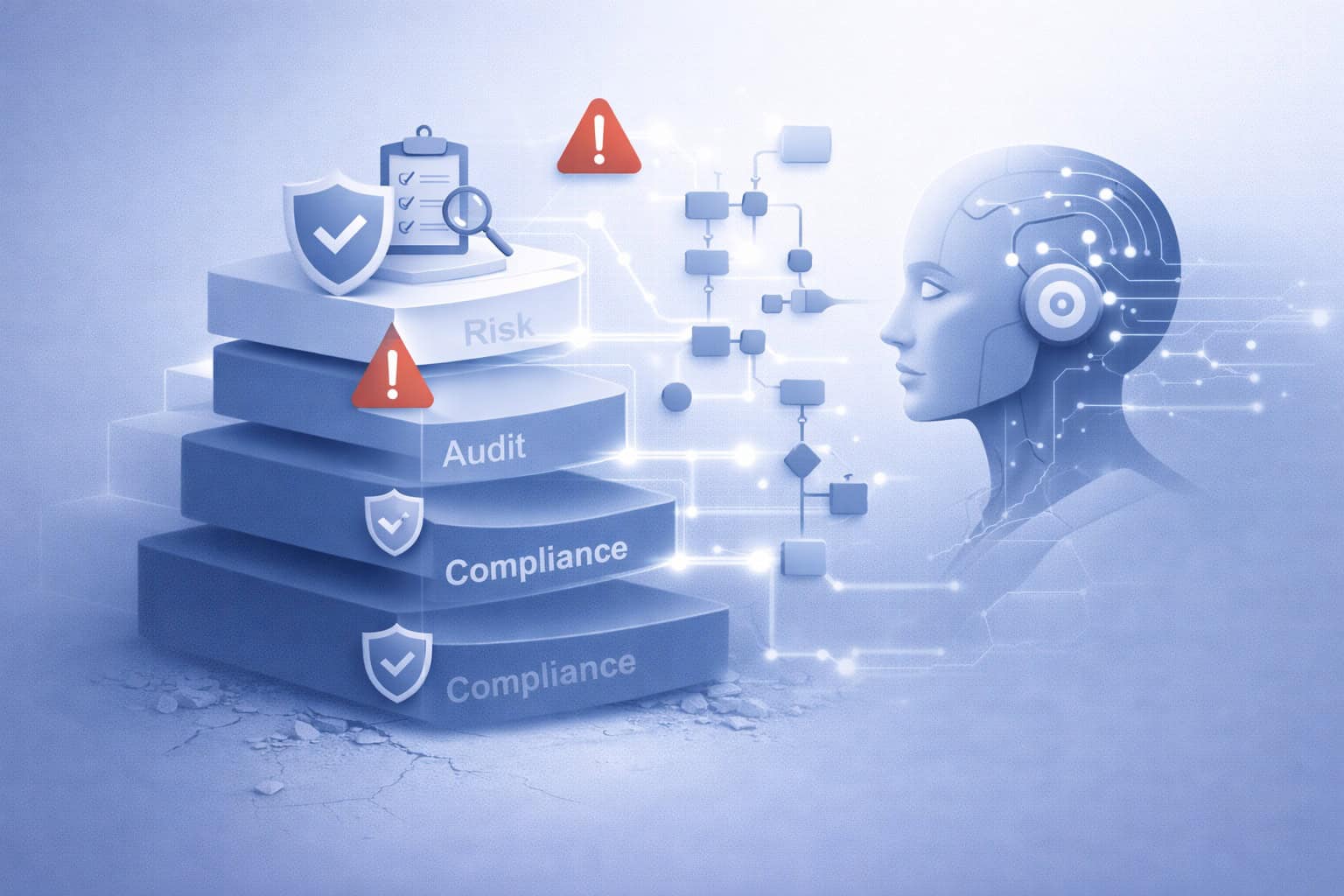
Organizations are now expected to demonstrate an understanding of how automated decisions are made, what data influences those decisions, and how errors are detected and corrected. Inability to do so is increasingly viewed as a governance failure rather than a technical limitation.
This shift is also reflected in insurance markets. Cyber and professional liability carriers are beginning to ask explicit questions about automated decision systems during underwriting. AI systems that cannot be documented or explained are increasingly viewed as unmanaged risk surfaces, potentially affecting coverage terms, exclusions, or premiums.
From a legal standpoint, organizations deploying AI without governance face heightened exposure during disputes. When decisions cannot be explained, defending them becomes significantly more difficult, regardless of whether the original intent was reasonable.
The Hidden Operational Impact on IT
Beyond legal and regulatory exposure, ungoverned AI introduces quiet but substantial operational risk. From an IT perspective, these systems often become opaque dependencies embedded within automation pipelines and business workflows.

AI systems may consume and reshape data lakes, generate outputs that downstream systems treat as authoritative, or trigger automated actions that bypass traditional validation controls. Over time, this creates environments where outcomes occur without clear cause-and-effect visibility.
When failures occur, IT teams are often forced to troubleshoot results rather than systems. Traditional monitoring and logging tools are poorly suited to explain why an AI model produced a specific recommendation or action. Without governance, root cause analysis becomes slower, less reliable, and more disruptive.
This operational opacity undermines resilience. Systems that cannot be explained are harder to recover, audit, and improve, increasing downtime and organizational risk.
What Minimum Viable AI Governance Looks Like
Effective AI governance does not require large committees or excessive bureaucracy. It requires clarity, ownership, and integration with existing governance structures.
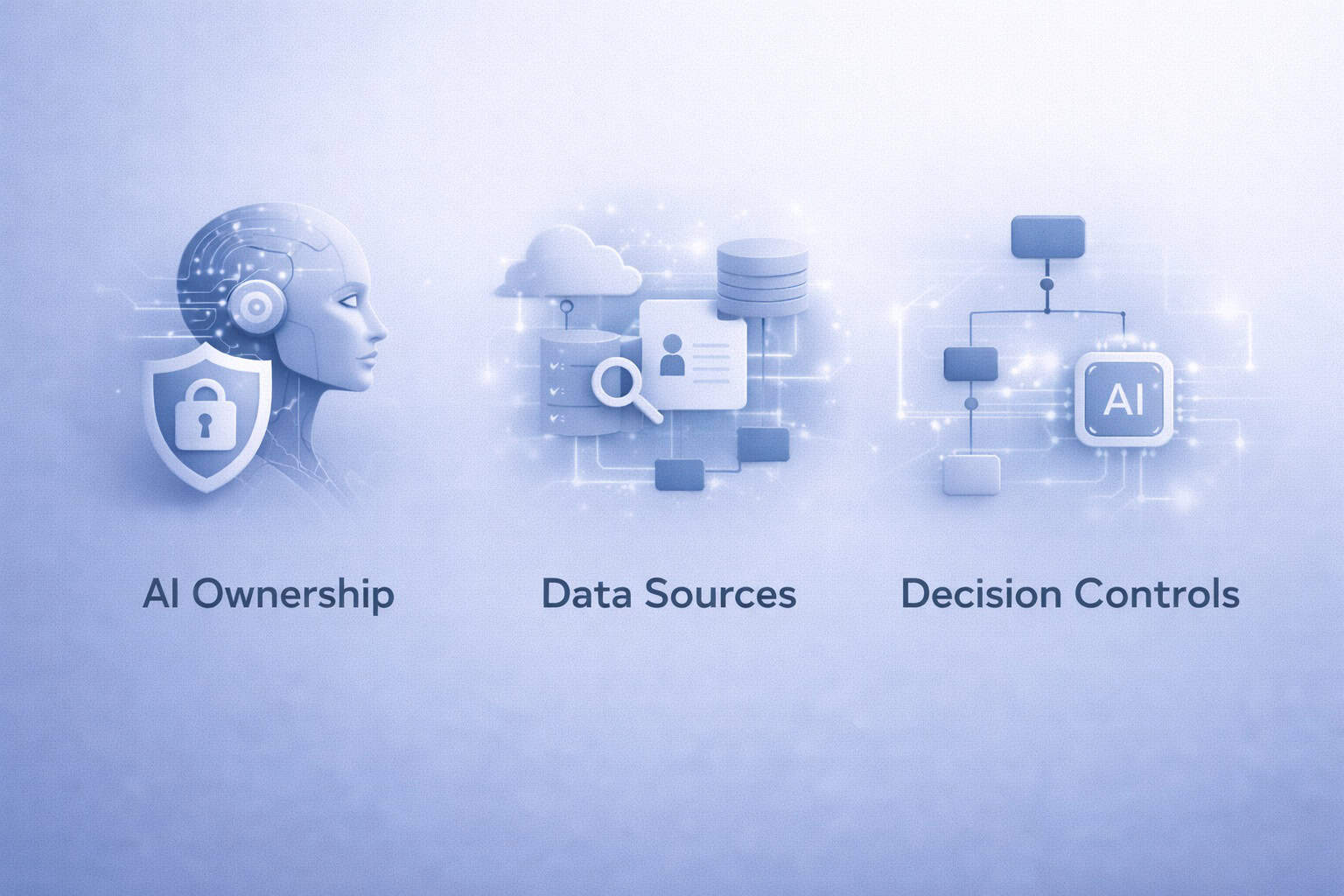
- Named executive ownership for each AI system
- Documented data inputs, outputs, and retention requirements
- Clear definitions separating advisory outputs from automated actions
- Human-in-the-loop controls for high-impact decisions
- Logging and audit trails aligned with legal and regulatory needs
- Explicit inclusion of AI systems in existing SOPs and risk registers
- NIST – AI Risk Management Framework (AI RMF 1.0)
- OECD – Principles on Artificial Intelligence
Organizations that implement these controls consistently are better positioned to benefit from AI while limiting downside exposure. Governance does not slow innovation. It makes AI adoption defensible, auditable, and sustainable.
The Executive Takeaway
AI is not dangerous because it is powerful. It becomes dangerous when no one owns the decisions it influences.
In 2026, the defining question for boards will not be whether AI is being used, but whether its decisions can be explained, audited, and controlled. Organizations that cannot answer that question clearly will increasingly find themselves reacting to regulators, insurers, and incidents rather than shaping outcomes.
Sources & References
- NIST – AI Risk Management Framework (AI RMF 1.0)
- OECD – Principles on Artificial Intelligence
- ISO/IEC 23894:2023 – Artificial intelligence risk management
- U.S. Federal Trade Commission – Algorithmic Accountability Guidance
- European Union – Artificial Intelligence Act overview
- Gartner – Strategic trends in AI governance
- World Economic Forum – Global AI Governance Framework