
The Hidden Cost of “Good Enough” IT: Why Small Gaps Become Big Failures

The Hidden Cost of “Good Enough” IT: Why Small Gaps Become Big Failures
Most major IT failures do not begin with a single catastrophic mistake. They begin quietly, with small compromises that seem reasonable at the time. A password policy is loosened to reduce friction. Documentation is skipped because “everyone already knows how it works.” A system remains unpatched because it has not caused problems yet.
Each of these decisions feels harmless, even pragmatic. Over time, however, these small gaps accumulate into structural risk that is far more dangerous than any single failure. Post-incident reports, regulatory findings, and public audits consistently show that outages, breaches, and service disruptions are rarely caused by one dramatic error. Instead, they emerge from environments where informal practices replaced governance and “good enough” quietly became the standard.
Why “Good Enough” IT Creates Hidden Risk
“Good enough” IT environments are those that function during normal operations but lack formal structure beneath the surface. Systems run, users are productive, and leadership sees no obvious red flags. The risk lies in what is missing: clear ownership, documented procedures, tested recovery plans, and consistently enforced controls.
IT governance exists specifically to address these gaps. ISACA defines effective IT governance as the framework that ensures technology supports organizational objectives while managing risk and optimizing resources. Organizations without mature governance struggle to align IT decisions with business needs and routinely underestimate their exposure until something breaks. This pattern is visible across municipalities, healthcare systems, utilities, and private enterprises alike .
When governance is informal or absent, accountability becomes blurred. No single decision feels risky on its own, and no single person appears responsible for the outcome. Risk disperses across departments, vendors, and individuals, becoming harder to see and easier to ignore.
How Small Gaps Compound Over Time
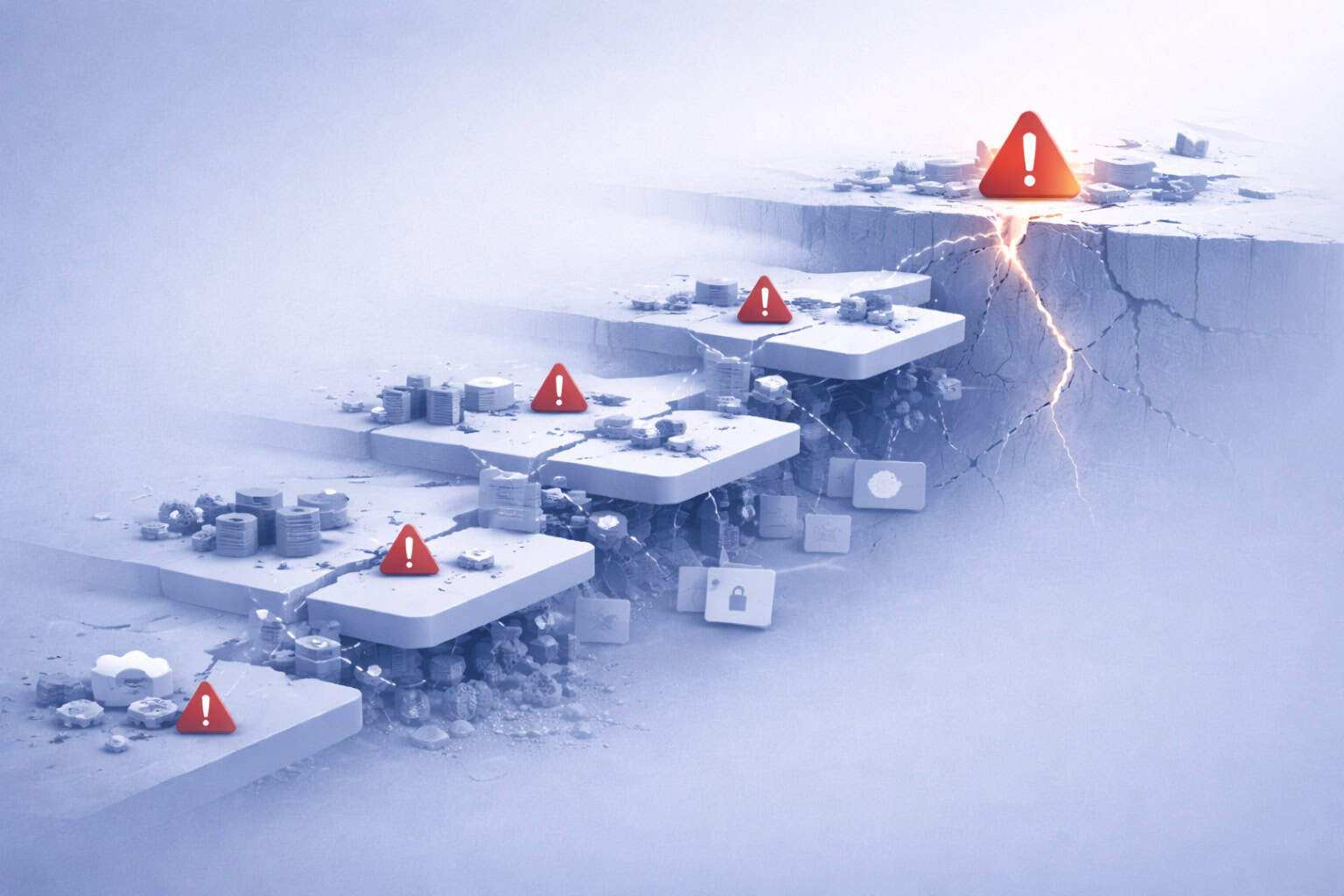
Small gaps in IT rarely remain isolated. They interact, reinforce one another, and grow more expensive the longer they persist. An undocumented system increases reliance on specific individuals. That reliance discourages change. Deferred updates accumulate. Over time, the environment becomes fragile even though it appears stable.
Backup reliability is one of the most common examples. Many organizations perform backups but fail to regularly test restoration. Backup validation is a widely recognized best practice, yet it is frequently overlooked, creating a false sense of security. Public incident reviews repeatedly show that organizations only discover backup failures during an actual outage, when recovery time is already critical .
Access control drift follows a similar pattern. Temporary permissions become permanent. Employees change roles. Vendors retain access long after projects end. Without regular audits, environments accumulate excessive privileges, increasing both security exposure and operational risk. This issue has been identified repeatedly in cloud security assessments and breach investigations .
These gaps also undermine efficiency. Onboarding takes longer because systems are poorly documented. Automation fails because inputs are inconsistent. Monitoring tools generate noise instead of insight. Each issue compounds the others, turning manageable complexity into systemic fragility.
Documentation Gaps and Operational Fragility
Documentation is often viewed as administrative overhead rather than operational infrastructure. In reality, documentation is what allows systems to be operated, recovered, and audited under pressure. Public sector audits frequently cite inadequate documentation as a contributing factor in service disruptions, particularly during leadership transitions or emergency events.
When knowledge exists only in people’s heads, organizations become vulnerable to staff turnover, illness, or simple unavailability. Disaster recovery analyses consistently show that undocumented or outdated procedures significantly lengthen recovery time and increase error rates during incidents. This pattern is well documented in both municipal audits and private sector post-mortems .
The risk is not theoretical. Regulators and auditors routinely classify documentation failures as material weaknesses. In public sector environments, these gaps can delay emergency services or disrupt critical infrastructure. In private organizations, they often result in compliance violations, financial losses, and reputational damage.
The Real Cost of Reactive IT
Organizations operating with “good enough” IT often rely on a reactive model: fix problems when they appear. While this may feel cost-effective in the short term, evidence consistently shows that it is far more expensive over time.
Industry research has found that the cost of downtime frequently exceeds the direct costs of cyber incidents themselves. Business interruption, lost productivity, and extended recovery efforts can quickly surpass the initial technical impact. This is especially true when environments lack clear recovery procedures and tested continuity plans .
Public reporting on major outages follows a familiar pattern. After the fact, investigations reveal outdated documentation, unclear ownership, untested backups, and insufficient oversight. These failures are rarely surprises in hindsight. Warning signs often existed for years but were normalized because systems continued to function.
Governance as a Foundation, Not a Constraint

There is a persistent misconception that governance slows organizations down. Research and real-world outcomes suggest the opposite. Governance provides the structure that allows organizations to scale safely and respond effectively to disruption.
Peer-reviewed research examining organizational resilience during crises has found a strong relationship between IT governance maturity and business continuity outcomes. Organizations with defined oversight, risk management practices, and accountability structures recover faster and make better decisions under pressure .
Governance does not mean bureaucracy for its own sake. It means clarity: who owns each system, how decisions are made, how risk is evaluated, and how success is measured. When these questions are answered explicitly, ambiguity decreases and resilience increases.
The Structural Weaknesses That Appear Again and Again
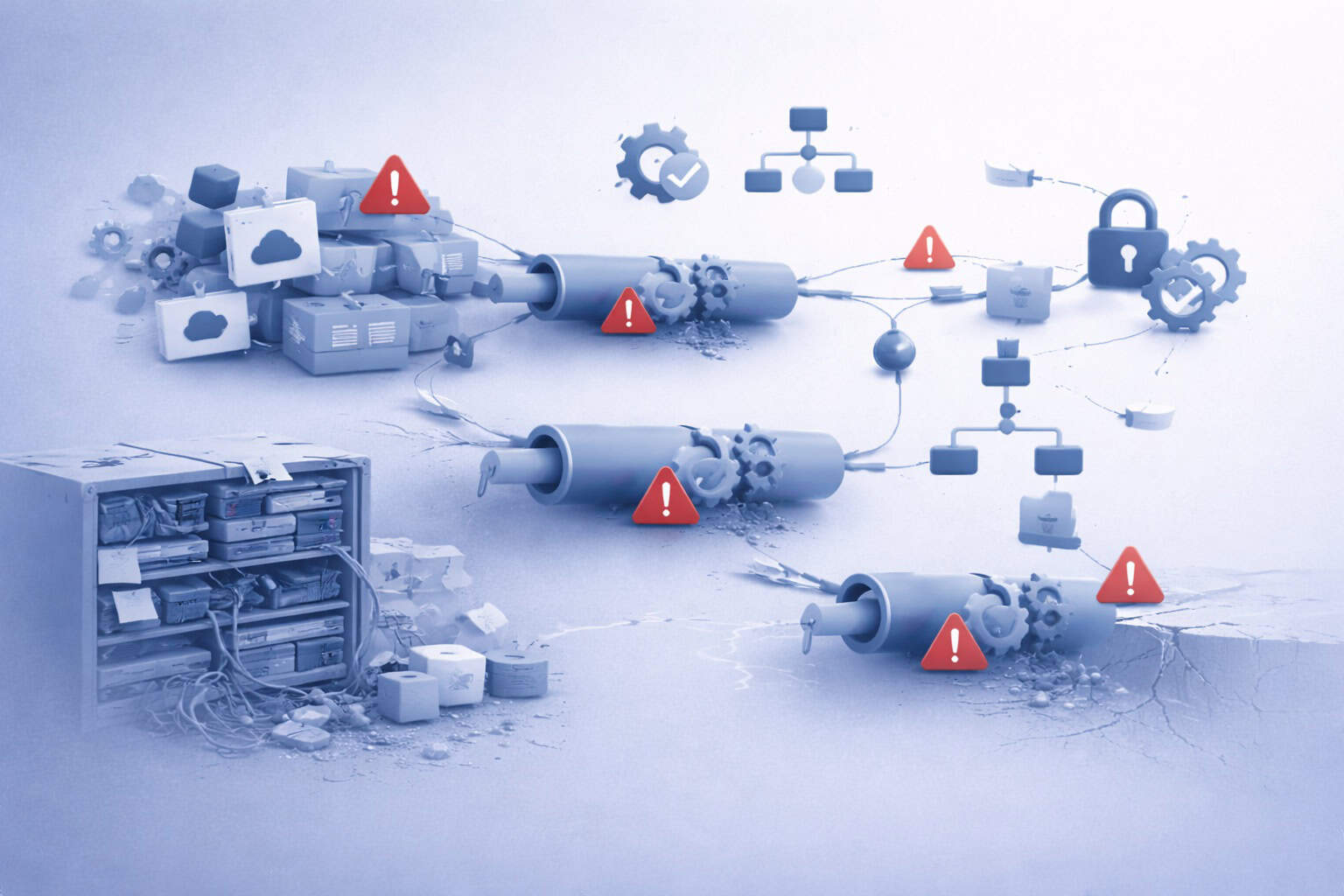
Across publicly documented incidents, audits, and investigations, the same structural weaknesses appear repeatedly:
- Backups exist, but restoration is untested or unreliable.
- System and data ownership is undefined or informal.
- Identity and access controls drift over time.
- Critical processes rely on tribal knowledge rather than documentation.
These weaknesses are rarely intentional. They emerge gradually as organizations prioritize immediate needs over long-term structure. The cost is deferred until a disruption forces the issue.
What Leaders Should Ask Before Failure Forces the Answer
Leaders do not need deep technical expertise to surface risk. They need to ask better questions. Who owns this system, and is that ownership documented? Are backups tested, or merely assumed to work? Could operations continue safely if key staff were unavailable tomorrow?
Would leadership be comfortable explaining current controls to an auditor, regulator, or incident review board? These questions shift the conversation from firefighting to stewardship and expose gaps while they are still manageable.
Fixing the Small Things Before They Break the Big Ones
“Good enough” IT often persists because it appears to work. The danger lies in confusing functionality with resilience. Systems can operate for years while quietly accumulating risk beneath the surface.
The organizations that avoid catastrophic failures are not those with the most tools, but those with the strongest foundations. They invest in governance, documentation, and validation. They treat IT not as a collection of systems, but as an operational capability that requires ongoing care.
The cost of addressing small gaps is almost always lower than the cost of recovering from large failures. The challenge is recognizing that risk before it announces itself.
In IT, what is ignored today often defines tomorrow’s crisis.